 Dinner Pals
TWO CUES. TWO DIFFERENT JOBS.
Show “when” and “what next”
A timer represents when a period ends. A visual schedule or picture card explains what comes next. Pairing them is one way to offer clearer information; neither replaces listening to the child.
The National Autistic Society suggests timetables, countdowns and familiar cues when preparing for change. Its guidance also recognises that overwhelm can involve sensory experiences, communication and anxiety.
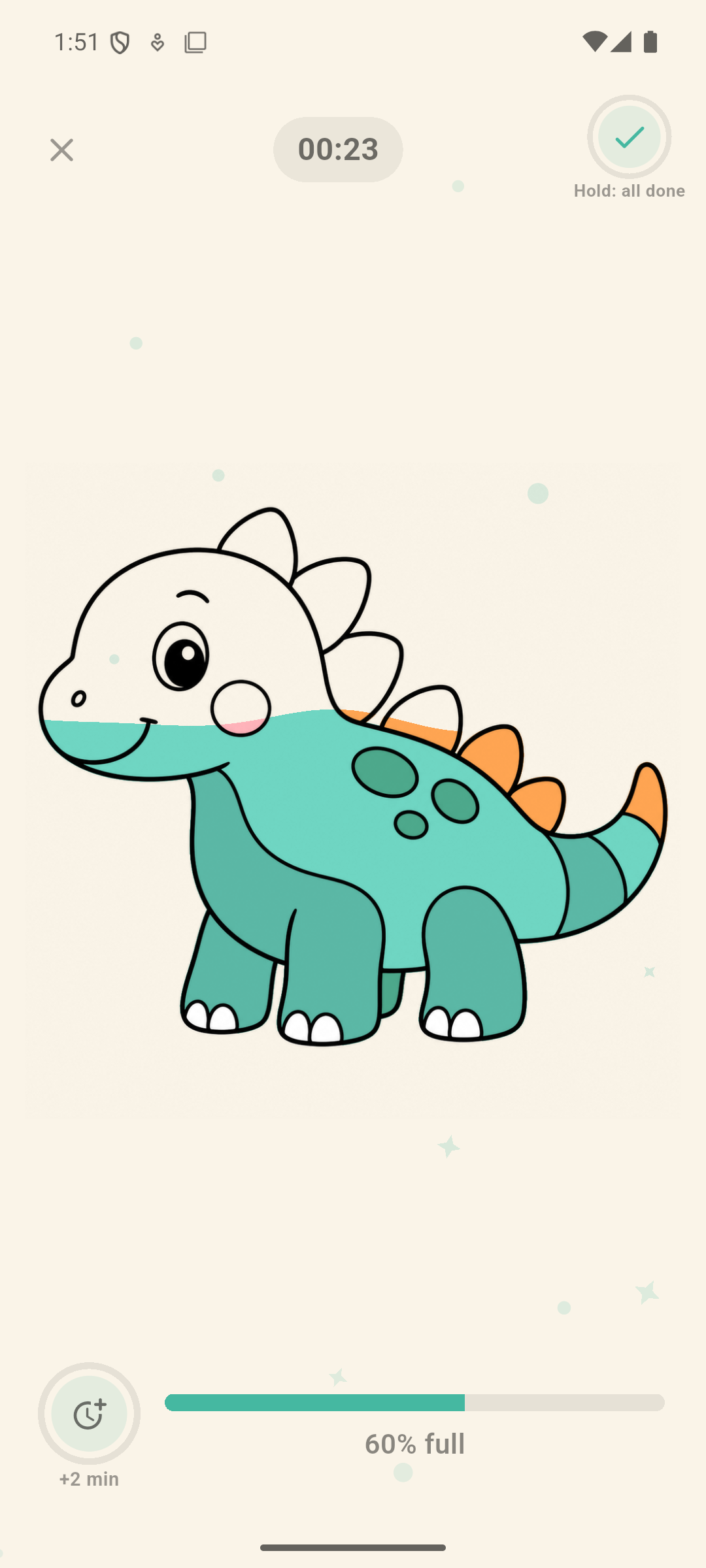

The timer shows time. A separate picture or explanation shows what follows.
LOOK A LITTLE CLOSER
The evidence is mixed—and individual
Some encouraging findings
In a study involving two elementary-age autistic boys, visual supports helped both begin their next activities sooner. That is small individual-case evidence about a support package. It is not a reliable estimate of what a timer app will do. Dettmer et al., 2000.
And important limits
Another two-child study found that visual schedules alone did not reduce the transition-related behaviour being measured. It tested schedules and specialised behavioural procedures, not countdown apps. Waters et al., 2009.
No single answer for every family
A 2026 synthesis of transition interventions found varied results and an overall estimate that was not statistically significant. It covered specialised studies across disabilities and ages, so it does not settle whether an everyday timer suits a particular family. Kim et al., 2026.


THE CHILD COMES FIRST
Big feelings need support.
No “stops meltdowns” promise.
Autistic children have different preferences and needs. No reviewed study tested Dinner Pals, and not every child will find an animated timer helpful.
If a countdown adds distress, pause. Listen, offer support and consider what is difficult about the change itself.

PICTURE AN EVERYDAY MOMENT
Play, then shoes.
Before a familiar transition, show a simple “play → shoes” card and explain the countdown. Put both where your child can check them.
When the timer ends, help with the next step. The picture explains what comes next; you are there to support the change.
The card is a separate visual support, not a Dinner Pals feature. This is an example to adapt, not a tested app intervention.


An example of a separate “now / next” cue.
START SMALL. NOTICE THE RESPONSE.
Let your child guide the choice.
- Introduce the cue at a calm, familiar moment.
- Choose whether the animation and sound suit your child; sound can be switched off.
- Explain the next activity as well as the time.
- Pause if the countdown increases distress. Look at what is difficult about the change itself.
Dinner Pals is one playful way to make time visible. See the actual display before deciding whether it fits your family.