 Dinner Pals
DOES THIS SOUND FAMILIAR?
“How long is a few minutes?”
Timing can be difficult for some children with ADHD
A meta-analysis of 27 studies, including 1,620 children and adolescents with ADHD and 1,249 comparison participants, found differences in timing accuracy and consistency. That is a group pattern; it does not describe every child or diagnose the reason for a difficult morning. The analysis did not test timers. Zheng et al., 2022.
Making time visible is one practical option
Instead of relying only on a spoken duration, you can show time passing. CHADD includes visible timers in its practical suggestions for explaining task duration and upcoming activity changes to preschool families. This is professional guidance, not a trial of an app. CHADD’s guidance.

EVIDENCE, WITH CONTEXT
What has been tested?
A randomised study targeted children aged 9–15 with ADHD who were on stable medication. Of 46 randomised participants, 38 were analysed.
Added time-skills practice, coaching, adaptations and assistive devices improved measured time processing and parent-rated daily time management; children’s self-ratings did not significantly improve. Wennberg et al., 2018.


A LITTLE TIME. A CLEAR NEXT STEP.
“Let’s get ready. Then shoes.”
Choose one familiar part of getting ready, such as finishing play. Show what the timer means, agree on a manageable duration, and explain the next step. Stay available to help.
If your child spends the whole time watching the animation instead of the routine, or the countdown feels stressful, change the approach. Another display, an ordinary clock or a different support may fit better.
The illustrated “now / next” card is a separate visual support, not a Dinner Pals feature or a tested app intervention.
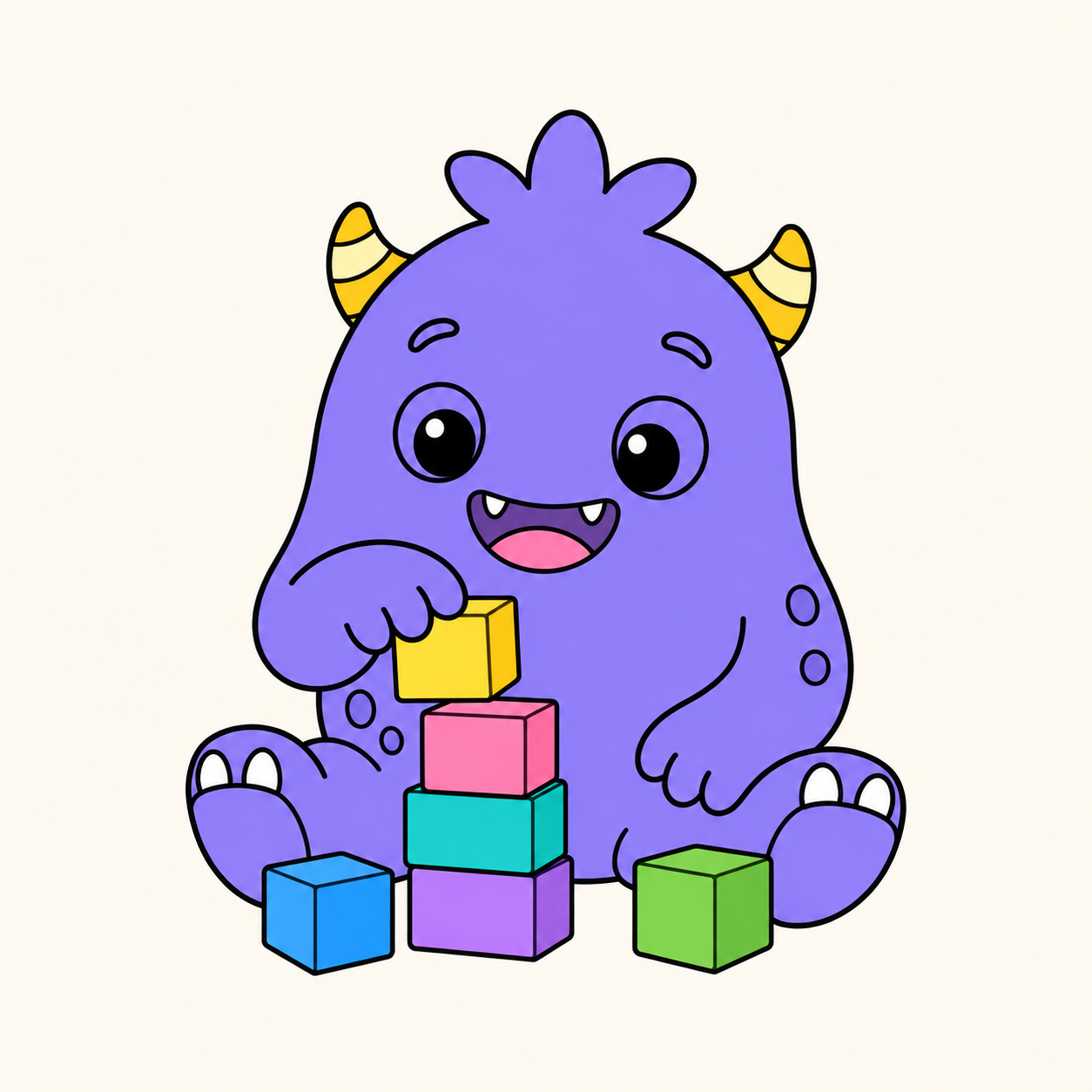

An example of a separate “now / next” cue.
EXPLORE WHAT FITS
A pal for an everyday routine.
Dinner Pals represents time with colourful characters. It offers routine timers, sound controls and custom timers with a selected cast. Those are product features you can see in the real app demo; they aren’t a promise to improve attention, executive function or school performance.
Start small and notice whether the cue makes the routine clearer. For persistent difficulties, talk with the professionals who know your child about suitable support.